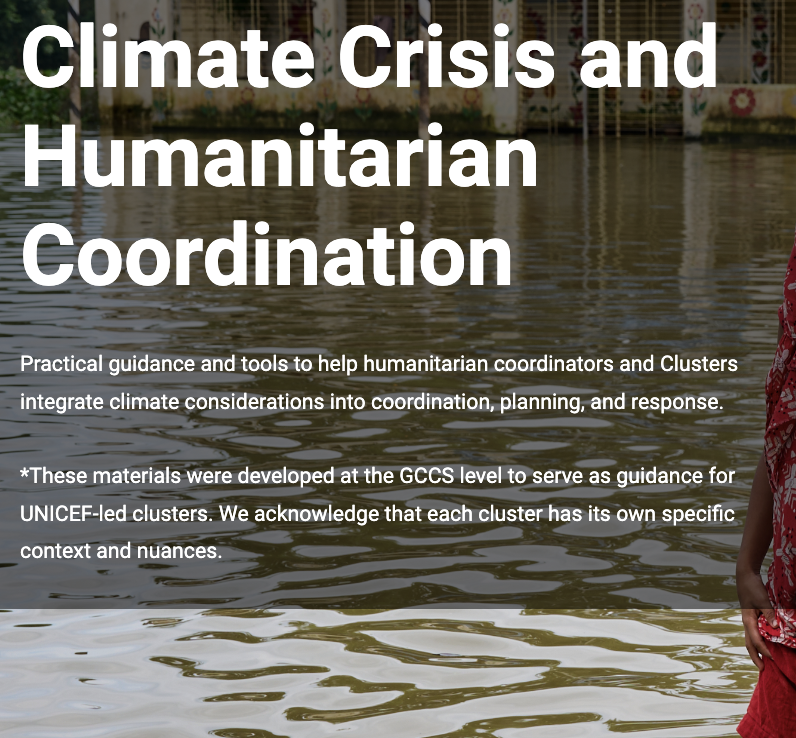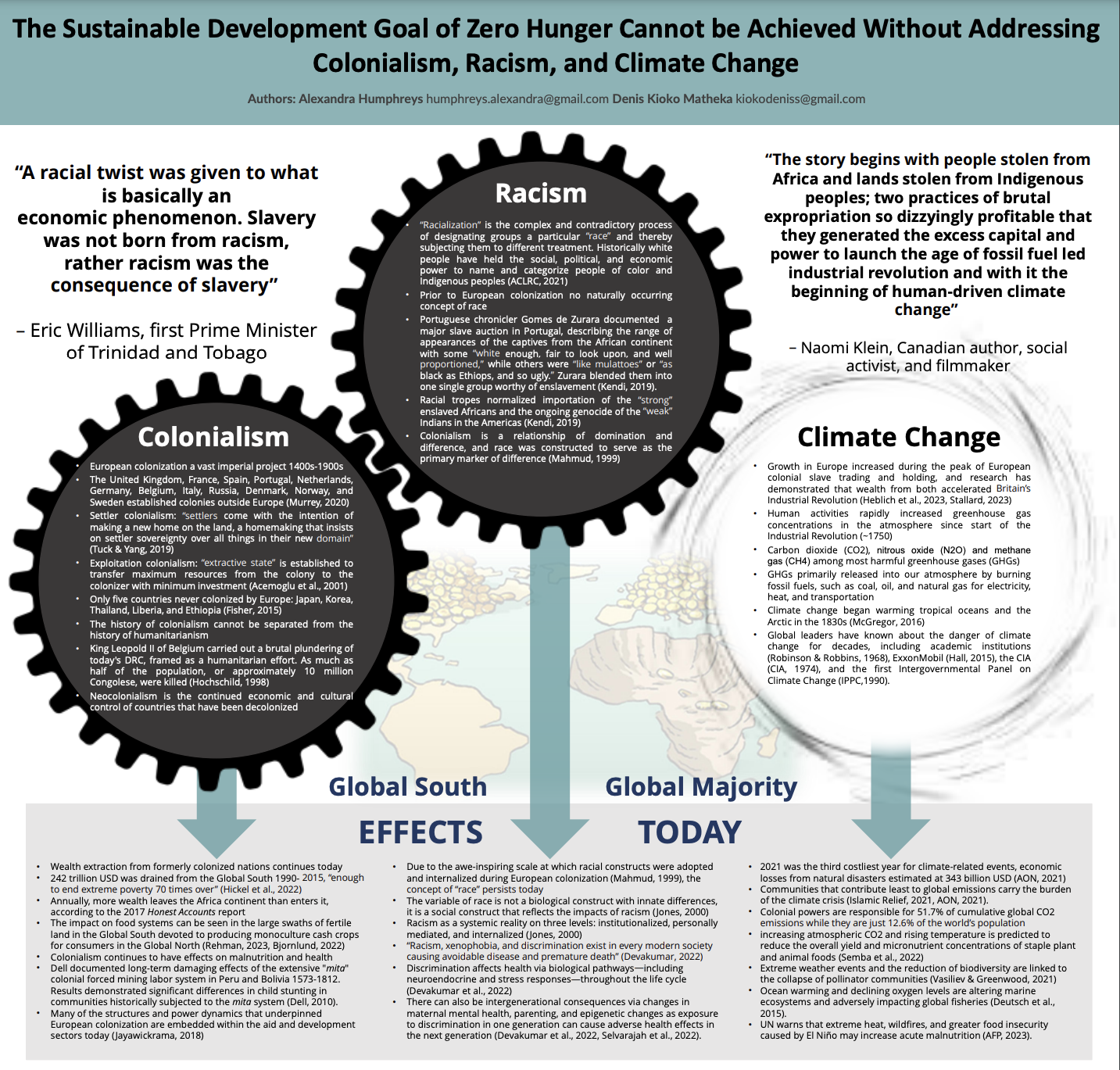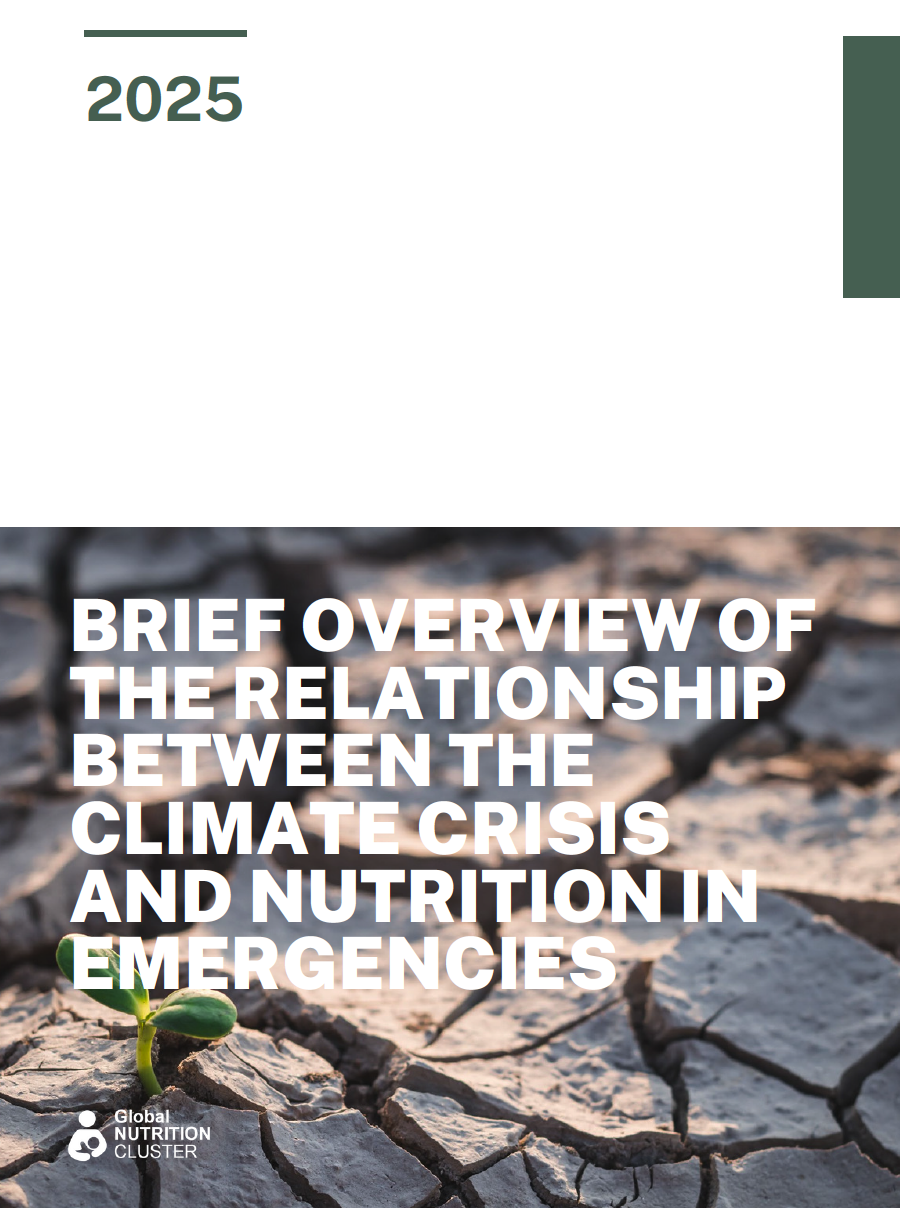
Evidence shows that climate shocks – such as floods and droughts – and changing seasons are increasing people’s level of risk and vulnerability. In fact, 12 out of the 15 countries most vulnerable to the climate crisis in 2023 also had internationally led humanitarian responses. Extreme climate events also have a negative impact on people’s nutritional status – particularly children – as issues of lost livelihoods, reduced production, displacement, and a lack of available food and appropriate nutrition are all drivers of undernutrition and malnutrition. Therefore, the Global Nutrition Cluster (GNC) plays a crucial role in addressing this crisis within its humanitarian mandate.
Climate Crisis Working Group
In the GNC’s 2022-2025 Strategy, climate was recognised as a priority cross-cutting theme requiring additional technical support for country nutrition clusters and sectors. In response, the GNC Climate Crisis Workstream was launched in April 2022 and formalized into a GNC Cross-cutting Working Group in September 2023. Foundational members of the Working Group include the GNC, UNICEF, and WFP (co-chair), and Action Against Hunger, with representatives from Action Against Hunger, UN Nutrition, ENN, French Red Cross (co-chair), Climate Action Accelerator, Columbia University Climate School, West Africa Regional Group on Climate & NiE, and the South Sudan Nutrition Cluster.
The Climate Crisis Working Group focuses primarily on climate, weather shocks, and seasonality shifts because of their impact on nutrition outcomes and their underlying causes. Since environmental degradation exacerbates vulnerabilities and the climate crisis, we also consider environmental impacts and greenhouse gas emissions within our work. The Working Group provides an important platform for exchanging ideas, generating learning, and defining an NiE and climate approach for the sector. Our 2024 Work Plan aims to mainstream climate into GNC services; generate evidence, advocacy, and guidance; and centers around five key activity areas listed below.
Key Activities
- Integrate a NiE climate lens into current approaches for nutrition risk analysis, preparedness, and anticipatory actions
- Exchange evidence on climate and nutrition pathways and their implications for NiE programming and coordination
- Generate analysis to advance advocacy initiatives on climate and environmental justice, anti-oppression, and localisation
- Support knowledge exchange and collate experiences related to NiE climate mitigation – including dimensions related to recipes for wasting treatment/supplementation, ready-to-use food packaging, supply chains, storage, and waste management
- Support the GNC to mainstream climate into its operational support services to nutrition practitioners
- Launch the Nutrition and Anticipatory Action Taskforce, co-led by the Climate Crisis Working Group and the Nutrition Information Systems Working Group, to map initiatives, foster partner engagement, and drive country-level actions
Useful links
- COP28 Coffee Chat – What does it mean for Nutrition in Emergencies Practitioners?
- Climate Working Group ToR
- Climate Working Group Workplan for 2024
- Nutrition and Anticipatory Action (AA) Task Force